

How Gambling Shows Up in Custody Cases, Especially Around the Holidays
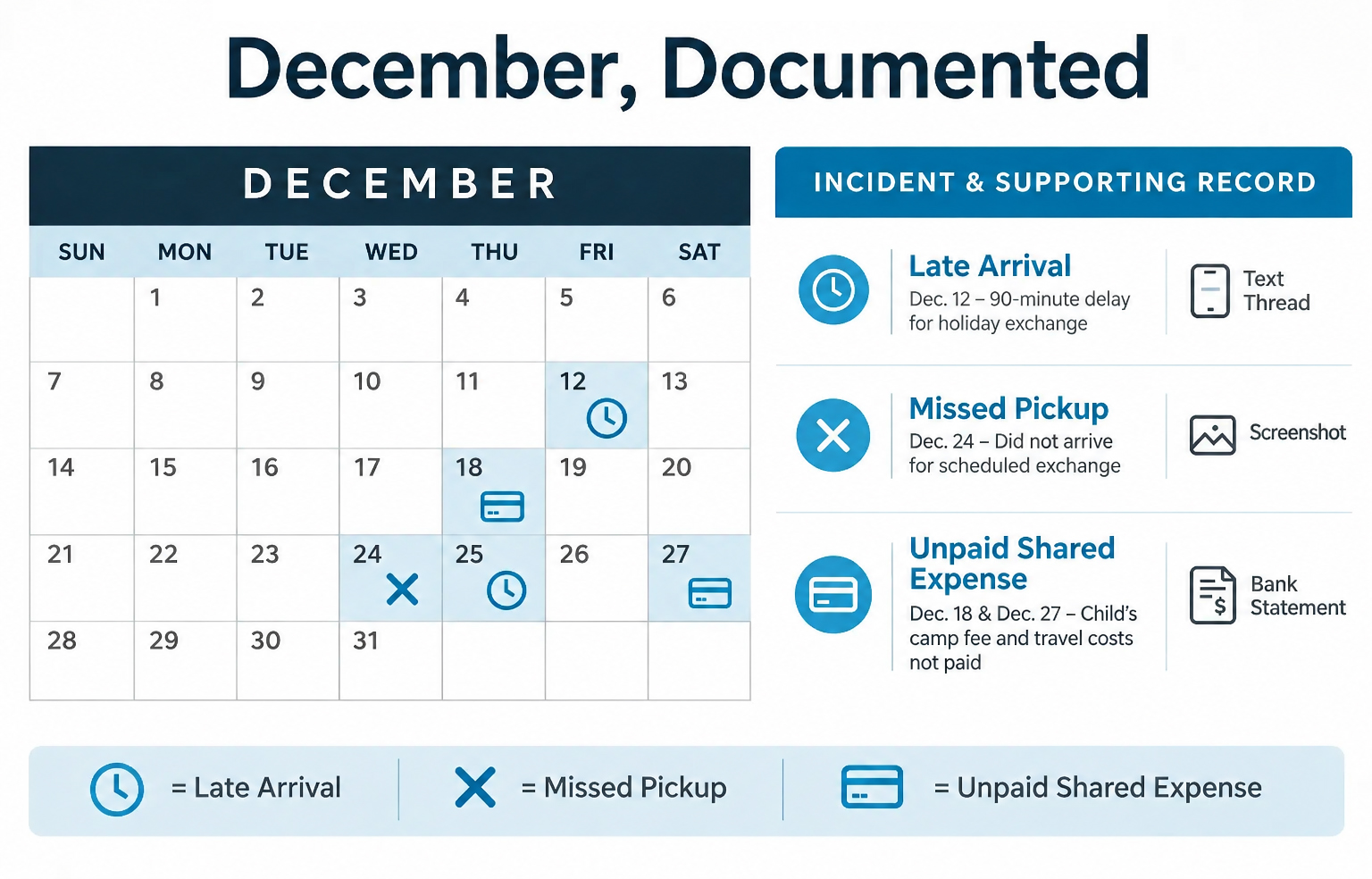
The exchange was scheduled for 4 p.m. Christmas Eve. At 4:40, there’s a text. Then one at 5:15. He shows up at 6:30, distracted, phone never leaving his hand. The kids had been sitting in their coats for two hours.
That’s usually how it starts – not with a confession, but with a pattern. You begin writing things down because someone has to.
Maryland legalized mobile sports betting in late 2022, and now placing a bet takes less time than making a sandwich. For the families we work with, the first sign something is wrong tends to be financial rather than behavioral. A deposit for the ski trip bounces. Or the other parent’s half of the orthodontist bill is suddenly “not right now.”
This post covers how gambling intersects with custody in Maryland: where the law draws the line, what actually holds up in court, and what your options are if you’re already operating under a custody order.
Where Parental Gambling & Custody Concerns Collide
Gambling rarely shows up in a custody case under its own name. It shows up in missed exchanges, unpaid bills, and kids who notice more than you think. Here’s where it tends to surface.
- Exchanges that fall apart. A judge doesn’t need the word “addiction” on paper. Three consecutive holidays with 90-minute delays tell their own story.
- Kids left to figure it out. A 9-year-old waiting in the car outside MGM National Harbor. An 11-year-old making dinner while her father watches the late game with $800 on it. These aren’t hypotheticals; they’re the kinds of things clients describe to us.
- Shared expenses that stop getting paid. Camp fees, braces, the plane ticket to see family – the moment those start disappearing is often the moment a parent realizes something has shifted.
- Marital money that simply vanished. In a divorce context, gambling losses can sometimes be treated as dissipation of marital assets. That can reshape the case’s entire financial picture.
- Holiday plans that quietly collapse. The trip was planned for months. Then it isn’t happening. Children take that in without saying much.
If any of this sounds like your situation, schedule a confidential consultation with Malech Law. We’ll look at what you’ve documented and tell you, plainly, what it supports.
Can gambling actually affect custody in Maryland?
It depends on what it’s affecting. Maryland judges focus on the child’s best interests, not the parent’s lifestyle choices in isolation. A parent who bets on football and still shows up consistently is in a very different position than one who skipped a pickup because a game went long. What the court wants to see is a connection between the gambling and what’s actually happening for the kids.
Learn about our child custody work here.
What if there’s already a custody order in place?
Modifying it requires showing a material change in circumstances since the order was entered, and that the change you’re asking for serves the child. A gambling problem that developed or escalated after the original agreement was signed can meet that threshold, depending on the facts. The outcome might be supervised exchanges, restricted overnights, or a shift in who controls the money set aside for school and medical expenses.
See how we approach complex divorce matters.
What Actually Holds Up in Court
Cases about financial instability and child custody don’t run on frustration alone. They run on records. Bank statements that show repeated transfers to FanDuel or a casino account. Texts about money “for the kids” that never showed up. A log of exchange times with dates, durations, and what the children said when they arrived.
When funds move through a business or investment account, a forensic accountant sometimes becomes necessary. The trail isn’t always obvious, but it’s usually there.
A few things tend to backfire: logging into the other parent’s accounts without permission, posting any of this publicly, or saying anything about it to the children. If you’re unsure whether a step you’re considering is a good idea, that’s exactly the kind of question to bring to us first.
The court also genuinely weighs another side of these cases. A parent who’s in real treatment – consistent, verifiable, with transparent finances – may have a credible path back to more parenting time. A well-constructed plan that protects the children now while leaving room for recovery later isn’t just humane; judges tend to notice it.
If You’re Already Dreading the Next Exchange
You can go into it the same way, or you can know where you stand before it arrives.
At your initial consultation with Malech Law, you meet with an attorney and leave with practical advice knowing what your options are. We look at your existing order, what you’ve documented, and what you’re actually worried about. Some parents need a revised holiday schedule with specific times and clear consequences. Some need a change in legal custody so one parent controls what gets spent on the children’s education and medical care. We’ll discuss which approach fits, and why the others don’t.
The families we represent – executives, physicians, business owners – often have finances that require individual analysis. In those situations, gambling and co-parenting disputes are layered and sensitive. That’s the work we do.
Contact Malech Law for a confidential consultation and go into the next holiday with a plan.
This blog is for informational purposes only and does not constitute legal advice. For guidance on your specific situation, please consult a licensed attorney.